> For the complete documentation index, see [llms.txt](https://docs-epc.gitbook.io/ncs-documents/llms.txt). Markdown versions of documentation pages are available by appending `.md` to page URLs; this page is available as [Markdown](https://docs-epc.gitbook.io/ncs-documents/migration/migrating-windows-vm-from-vsphere-to-ncs.md).
# Migrating Windows VM from vSphere to NCS
วิธีการ migrate Windows VM จาก vSphere ไปยัง NCS
NIPA Cloud Space หรือ NCS เป็น pubilc cloud ที่คุณสามารถย้ายระบบของคุณมาใช้บน NCS ได้ด้วยตนเอง คุณสามารถศึกษาวิธีการย้ายระบบจาก Windows VM บน vSphere มาสู่ NIPA Cloud Space และติดตั้ง instance ได้จากเอกสารนี้
**ระบบ Windows VM ที่สามารถย้ายสู่ NIPA Cloud Space ได้ มีดังนี้**
* Windows Server 2022
* Windows Server 2019
* Windows Server 2016
* Windows Server 2012 R2
* Windows 8
* Windows 8.1
* Windows 10
การย้ายระบบสู่ NIPA Cloud Space สามารถทำได้ตามขั้นตอนต่อไปนี้
1. [จัดการ Windows ใน VMware ให้พร้อม](#step-1-windows-vmware)
2. [Convert ไฟล์ vmdk เป็น qcow2 เพื่อ Import สู่ NCS](#step-2-convert-vmdk-qcow2-import-ncs)
3. [อัปโหลดขึ้น NIPA Cloud Space](#step-3-nipa-cloud-space)
4. [สร้าง instance จากไฟล์ที่อัปโหลดแล้ว](#step-4-instance)
## Step 1: จัดการ Windows ใน VMware ให้พร้อม
1. **Clone VM** ที่ต้องการ migrate
 2\. ดาวน์โหลด virtio driver ที่เป็น ISO file ที่ และเชื่อมต่อ ISO file ไปยัง VM ที่ clone มาในข้อ 1.
 3\. เมื่อเชื่อมต่อ virtio file มายัง VM แล้ว จะได้ไฟล์ DVD virtio-win-0.1.215 ดังภาพ ให้คลิกขวาแล้วเลือก Open in new window
 4\. Double click ที่ virtio-win-guest-tools เพื่อติดตั้งทุกอย่างที่จำเป็นในการย้ายไปยัง OpenStack
 5\. เมื่อคลิกแล้วจะพบหน้าต่างติดตั้ง Virtio-win ให้ติดตั้งโดยคลิก Next >> I accept... >> Next >> Next (ไม่ต้องแก้ไขอะไร) >> Install
 6\. คลิก Install เพื่อติดตั้ง
 7\. เมื่อติดตั้งเสร็จแล้ว คลิก Finish
 8\. เมื่อติดตั้งสำเร็จ จะปรากฏ Installation Successfully ดังภาพ
 9\. ตรวจสอบ service การทำงานของ QEMU Guest Agent
 10\. เปิด remote desktop ที่ server manager

11\. ปิด filewall ทุกระดับ

12\. ตรวจสอบอีกครั้งให้แน่ใจว่า remote desktop เปิด และ firewall ปิดอยู่ ดังภาพ
10\. เปิด remote desktop ที่ server manager

11\. ปิด filewall ทุกระดับ

12\. ตรวจสอบอีกครั้งให้แน่ใจว่า remote desktop เปิด และ firewall ปิดอยู่ ดังภาพ
 13\. Uninstall VMware Tools
 14\. ติดตั้ง CloudbaseInit ซึ่งเป็น cloud-init สำหรับ Windows โดยสามารถดาวน์โหลดได้ที่
{% embed url="" %}
15\. เริ่มติดตั้งโดยการคลิกที่ไฟล์ที่ดาวน์โหลดแล้ว จากนั้นคลิก Next >> I accept the terms... >> Next >> Next (ไม่ต้องแก้ไขอะไร) >> Next (ไม่ต้องแก้ไขอะไร) >> Install

16\. เมื่อติดตั้งเสร็จแล้วให้เลือก
1\) Run Sysprep ...
2\) Shutdown ...
19\. คลิก finish แล้วรอสักครู่เพื่อให้เครื่อง shutdown

### Step 2: Convert ไฟล์ vmdk เป็น qcow2 เพื่อ Import สู่ NCS
1\. ดาวน์โหลด Disk FIle จาก vCenter
14\. ติดตั้ง CloudbaseInit ซึ่งเป็น cloud-init สำหรับ Windows โดยสามารถดาวน์โหลดได้ที่
{% embed url="" %}
15\. เริ่มติดตั้งโดยการคลิกที่ไฟล์ที่ดาวน์โหลดแล้ว จากนั้นคลิก Next >> I accept the terms... >> Next >> Next (ไม่ต้องแก้ไขอะไร) >> Next (ไม่ต้องแก้ไขอะไร) >> Install

16\. เมื่อติดตั้งเสร็จแล้วให้เลือก
1\) Run Sysprep ...
2\) Shutdown ...
19\. คลิก finish แล้วรอสักครู่เพื่อให้เครื่อง shutdown

### Step 2: Convert ไฟล์ vmdk เป็น qcow2 เพื่อ Import สู่ NCS
1\. ดาวน์โหลด Disk FIle จาก vCenter
 2\. ไฟล์ที่ดาวน์โหลดมาแล้ว จะเป็นไฟล์ zip ให้ extract file นั้น

3\. เมื่อ extract file แล้ว จะได้ file ดังภาพ
2\. ไฟล์ที่ดาวน์โหลดมาแล้ว จะเป็นไฟล์ zip ให้ extract file นั้น

3\. เมื่อ extract file แล้ว จะได้ file ดังภาพ
 33\. Convert ไฟล์ vmdk เป็น qcow2
 34\. เมื่อ convert สำเร็จ จะได้ไฟล์ qcow2 ดังภาพ
 ###
### Step 3: อัปโหลดขึ้น NIPA Cloud Space (NCS)
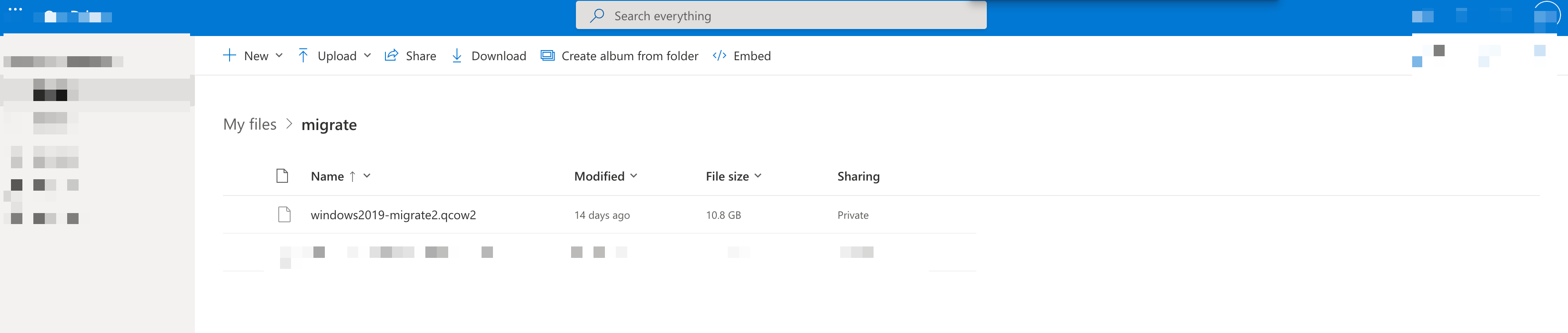
1. ฝากไฟล์ qcow2 ที่ได้ บนแพลตฟอร์มออนไลน์ใดก็ได้ ในที่นี้ จะใช้ Onedrive
###
### Step 3: อัปโหลดขึ้น NIPA Cloud Space (NCS)
1. ฝากไฟล์ qcow2 ที่ได้ บนแพลตฟอร์มออนไลน์ใดก็ได้ ในที่นี้ จะใช้ Onedrive
 2\. ล็อกอินเข้า NIPA Cloud Space แล้วคลิกที่ Image ดังภาพ
 3\. ตั้งชื่อ image และ URL ของ image file
 4\. คลิกที่ Advance settings แล้วตั้งค่าดังนี้
* Operating System Type: Windows
* Min Disk: 40
* คลิกเลือก Cloud-Init Agent
* คลิกเลือก QEMU Agent
4\. คลิกที่ Advance settings แล้วตั้งค่าดังนี้
* Operating System Type: Windows
* Min Disk: 40
* คลิกเลือก Cloud-Init Agent
* คลิกเลือก QEMU Agent
 ### Step 4: สร้าง instance จากไฟล์ที่อัปโหลดแล้ว
1\. ไปที่ instances แล้วคลิก Instance(s) เพื่อสร้าง instance
### Step 4: สร้าง instance จากไฟล์ที่อัปโหลดแล้ว
1\. ไปที่ instances แล้วคลิก Instance(s) เพื่อสร้าง instance
 2\. ไปที่ Images เพื่อเลือก Images ที่ import เข้ามา
 3\. เลือก Machine Type
 3\. ตั้งชื่อ Instance
 4\. เลือก storage type สำหรับ volume
 5\. ตั้งค่า IP address
 6\. เลือก security group
 7\. สร้าง instance คลิก LAUNCH
 8\. ระหว่างสร้าง instance จะปรากฏสถานะ ดังภาพ
 9\. เมื่อสร้างเสร็จแล้ว ให้คลิกที่ชื่อ instance
 10\. คลิก CONSOLE
 11\. Migrate Windows VM ได้สำเร็จ
